
The following is reposted from an article I wrote for the Wise Traditions/Weston A. Price Journal Spring 2025.
Store-bought vs. Sourdough Bread: Are There Any Healthy Store-bought Breads?
It was never clear to me why there was a yeast shortage in 2020 during “Covid crazy” time, were that many people suddenly baking bread? Apparently so, because the way sourdough bread took off that year was proof–pun intended! Social media was all abuzz with lessons on making your own starter from scratch and with instructions on how to surprise your family with a beautiful boule.

It was exciting to finally master this myself after several previous flops. Just flour and water and in a little over a week I had my very own leavening power. Add in more flour plus salt and water, and my own hands created a delicious and beautiful loaf of the healthiest bread in the world. Learning this simple skill felt empowering and my family was impressed as well, especially when I placed a warm, plesantly chewy piece of bread in front of them with a big slab of grass-fed butter!
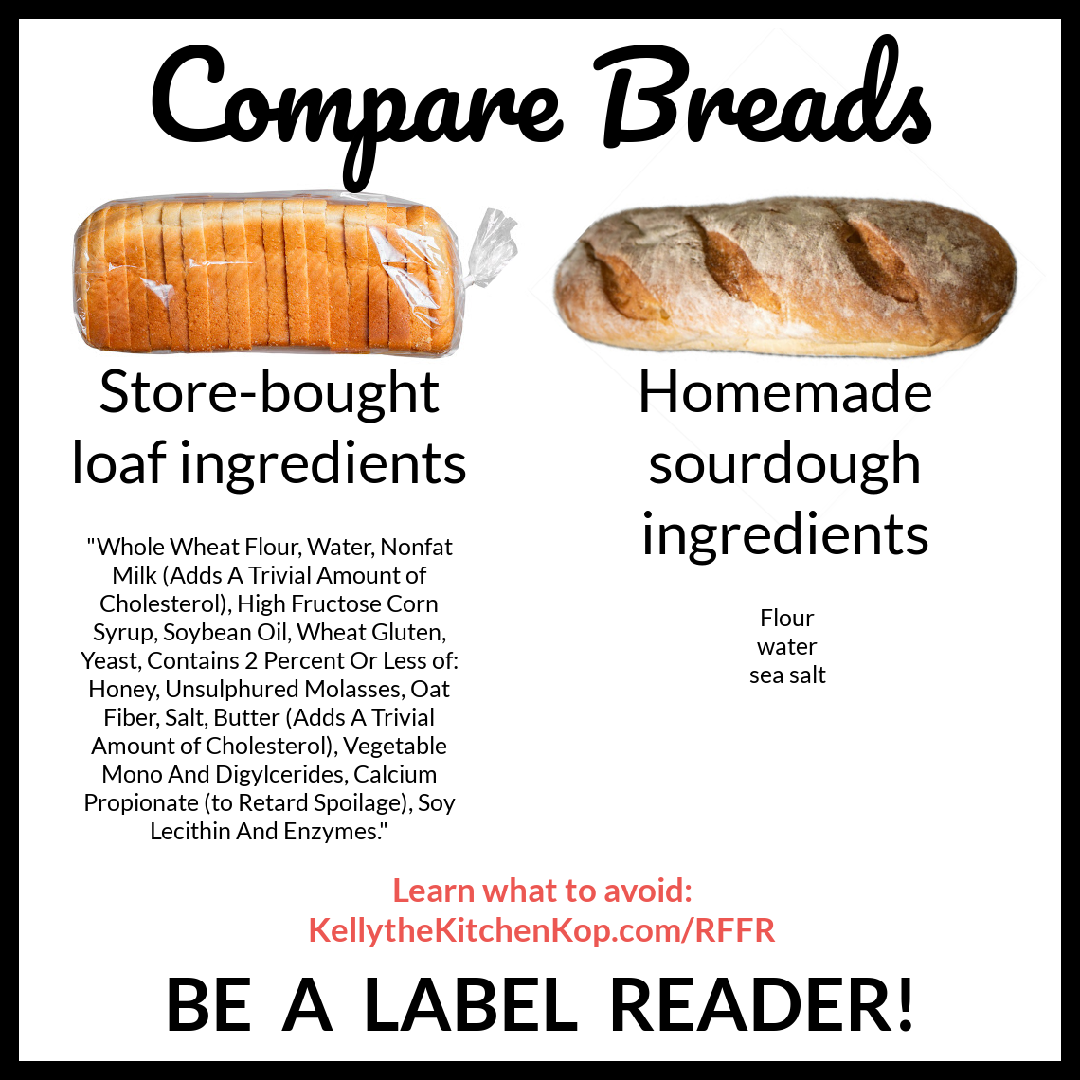
Store-bought vs. sourdough bread–the differences between this bread and the bread you’ll find at your local supermarket are vast:
Most store-bought bread is horrible. Even if it says “organic” or “sourdough”, you still need to read labels and watch out for the following:
- Seed oils (canola, soybean, safflower, sunflower, corn, cottonseed, etc.)—even when organic these still cause inflammation, cancer, infertility, obesity, heart disease and more.
- Synthetic folic acid added to store-bought breads can cause a folate deficiency and many health problems as a result.
- Anti-nutrients in whole grains that are not soaked, soured or fermented block mineral absorption resulting in nutrient deficiencies and tooth decay, gut dysbiosis, eczema or other autoimmune issues.
- Gluten or “vital wheat gluten” is extra difficult to digest for those with gluten sensitivity and is a highly processed ingredient used to get a better rise.
- Ascorbic Acid is usually from genetically modified (GMO) corn and used as a dough conditioner.
- Soy lecithin is a highly processed soybean oil waste product that acts as an emulsifier and extends the shelf life of processed foods—most of which comes from genetically modified (GMO) soy.
- Look out for other preservatives too—there are many types of chemical additives used for a better rise, for a softer loaf, for taste, or for bleaching, and they’ll be found under all sorts of names. You'll find mystery ingredients such as calcium propionate, sorbic acid, sodium stearoyl, lactylate, potassium chloride, calcium sulfate, natamycin, calcium peroxide, calcium iodate, DATEM, ethoxylated mono- and diglycerides, and more. Many of these are banned in countries outside the U.S. and are strongly linked to cancer and other specific health problems.
- Banned in the EU, Azodicarbonamide is sometimes called a ‘yoga mat' chemical because of its widespread use in foamed plastics. It’s been linked to cancer, respiratory issues and allergies. It’s used to replace potassium bromate (or “bromated wheat flour”) which strengthens dough.
- Almost all wheat products in the US are fortified with synthetic nutrients. Fortified wheat products are some of the worst and most inflammatory foods you can eat, especially those fortified with iron. These nutrients are not bioavailable and can interfere with absorption of other nutrients. This can also lead to excess iron, which is a major cause of gut issues and inflammation.
- Yeast on a bread label means it is NOT a true sourdough. True sourdough bread doesn’t need yeast because it uses the leavening power of the natural yeast and healthy bacteria in the starter.
- Nonfat milk—why? We want more healthy animal fats, not less.
- High fructose corn syrup—yes, this is still found on many food labels, even though most know by now that it’s a very unhealthy highly processed genetically modified (GMO) sweetener. HFCS may also be labeled “fructose”.
So is there any healthy store-bought bread?
It’s not easy but I have occasionally found a good option for a true sourdough at my local supermarket, usually in the deli area. The ingredients should be only organic flour, water, and salt. It may also have a natural sweetener, or maybe some cheese which is really delicious—my family loves Asiago sourdough.
Your best bet is the local health food store
You’ll likely have more choices there, and once you find a sourdough loaf with a nice short ingredient list and nothing unrecognizable, then you’ll want to do some trial and error to see which ones your family likes. It’s here where I also found what I call my “compromise loaf” that our family uses for sandwich bread. I’m still experimenting with making a sourdough loaf that stays soft for sandwiches, so in the meantime this one isn’t perfect, but does have a fairly good ingredient label: it’s organic, has a long fermenting time, and has no seed oils, but it does have yeast.
Why is sourdough better?
- The natural fermentation in soured bread unlocks all of the nutrients. Mixing flour in an acidic medium (your starter) at warm temperatures, as in the sourdough process, activates phytase and reduces or even eliminates phytic acid, which is a mineral blocker and can lead to significant nutrient deficiencies and health problems. One study showed almost complete elimination of phytic acid in whole wheat bread after eight hours of sourdough fermentation.
- Many who can't tolerate grains are able to eat sourdough bread with no problems because of the longer rise and more time for the gluten to be broken down, so it's easier to digest. (However, most agree that those with true Celiac disease should not indulge.)
- Sourdough lowers the glycemic index of the bread, so it doesn't cause the same blood sugar spikes as other breads will.
- Sourdough is the most traditional food, it’s the way bread has been made for thousands of years!
Making sourdough bread is not difficult!
Any flour, water and salt will make sourdough magic happen in your kitchen and will be leaps and bounds healthier than most store bought loaves, but here’s how to increase the health benefits of sourdough even more:
- Use organic flour to avoid pesticides and herbicides such as glyphosate (which is used as a desiccant on non-organic wheat).
- Use all or at least part whole grain flour for more nutrients. (My family doesn’t care for the more dense 100% whole grain loaves so I use half organic whole grain einkorn flour and half organic unbleached all-purpose flour.)
- Try ancient whole grain flour like spelt or einkorn—einkorn is the original wheat that has never been hybridized, so many who can't tolerate regular wheat, even when organic, can eat einkorn with no problem. This is also higher in nutrients.
- Use filtered water to avoid toxins.
- Use real sea salt for more minerals.
- Serve with plenty of real butter or olive oil for more nutrients and this also decreases the glycemic index of the bread.
Does sourdough intimidate you?
If you haven't tried it yet, trust me: making sourdough becomes a simple, fun, comfortable habit in no time. Learn how to make your own starter and a beautiful sourdough boule here (includes a video).
More you might like:
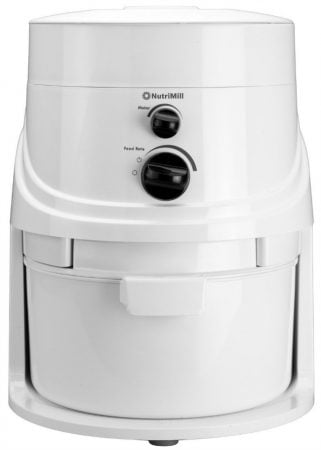
- Want to make your sourdough bread even MORE fresh and healthy for your family? Grind your wheat into flour yourself!
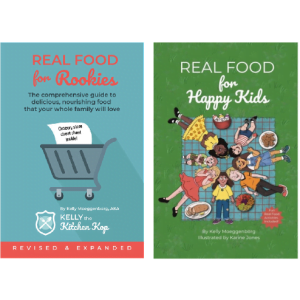
- Want a breakdown of what to avoid and what’s good-better-best in each food category? Get a free grocery store cheat sheet at KellytheKitchenKop.com/free or get my books here: Real Food for Rookies or Real Food for Happy Kids.






Nancy says
Question, I’ve been ordering from Organic Bread of Heaven, sometimes the sprouted sourdough loaf and sometimes the rustic sourdough: would you recommend one over the other or maybe something else entirely?
Thanks!
KitchenKop says
Hi Nancy,
Looks like the sprouted sourdough has more whole grains vs. white flour, so if you like the taste of that one, I’d say that’s the best choice. 🙂
Kelly